
Mini Excavators vs. Compact Track Loaders: Which Machine Is Right for Your Job?
When it comes to compact construction equipment, two of the most popular choices are mini excavators and compact track loaders. Both machines are powerful, versatile, and useful on Alberta jobsites, but they are designed for different types of work.
At Emerald Equipment, we help contractors, landscapers, builders, municipalities, acreage owners, and industrial operators choose the right compact equipment for their needs. If you are comparing a mini excavator and a compact track loader, understanding the strengths of each machine can help you make a smarter investment.
Understanding the Difference Between Mini Excavators and Compact Track Loaders
Mini excavators and compact track loaders are both compact machines, but they perform very different roles.
A mini excavator is primarily designed for digging, trenching, grading, demolition, and precision excavation. A compact track loader is designed for loading, carrying, grading, pushing, clearing, lifting, and running a wide range of attachments.
In many fleets, these machines work together. The mini excavator digs, trenches, and places material, while the compact track loader moves material, grades the site, and handles attachments.
What Is a Mini Excavator Best Used For?
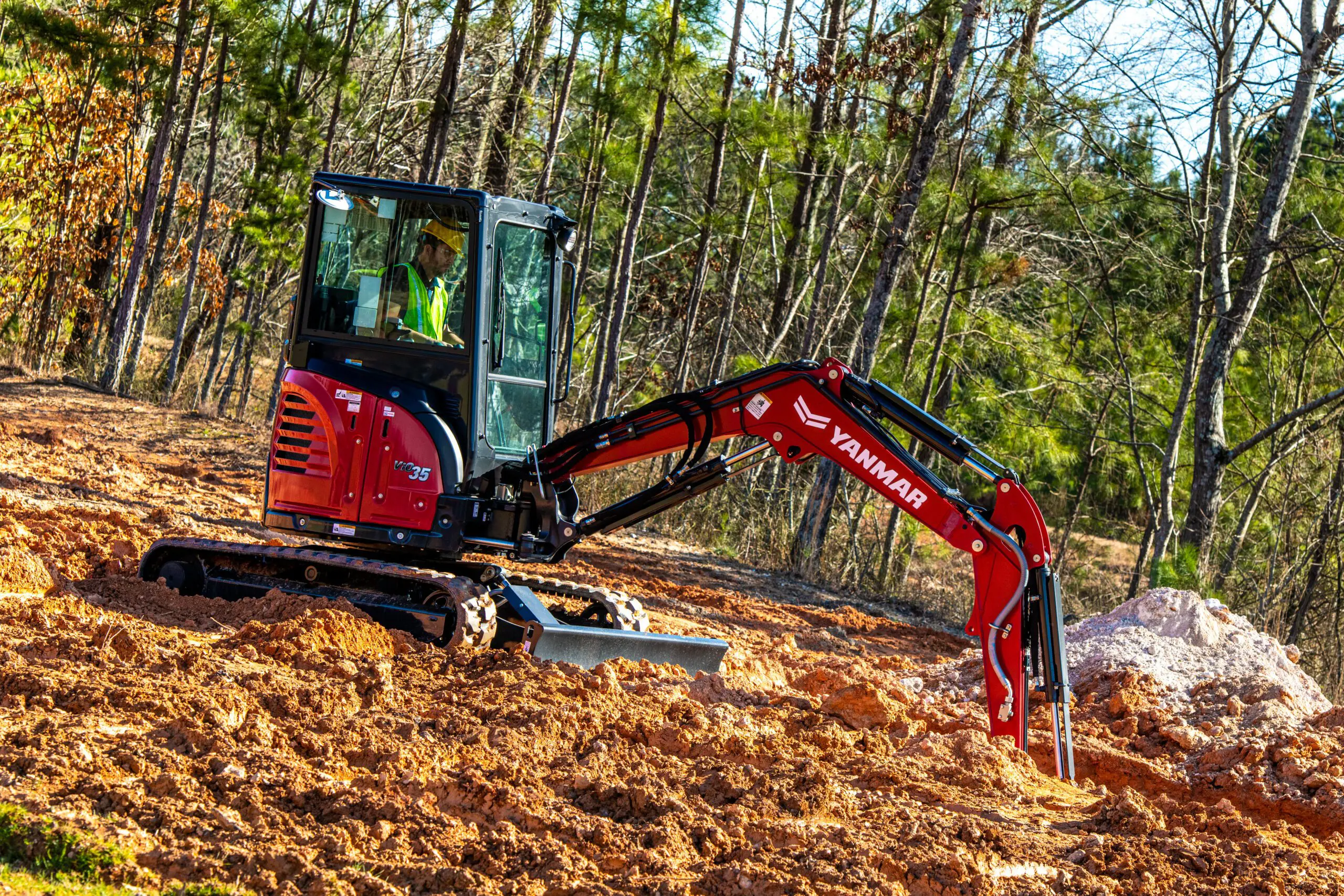
A mini excavator is a compact digging machine with a boom, stick, bucket, and rotating upper structure. Because the machine can swing, dig, and place material with precision, it is one of the most useful pieces of equipment for excavation work in tight spaces.
Mini excavators are commonly used for:
- Trenching
- Utility installation
- Drainage work
- Foundation excavation
- Landscaping projects
- Small demolition jobs
- Retaining wall preparation
- Septic and water line work
- Residential construction
- Acreage and rural property maintenance
Mini excavators are especially valuable when you need controlled digging power without bringing in a full-size excavator. They are compact enough for residential and commercial jobsites but still capable enough to handle demanding excavation tasks.
Benefits of a Mini Excavator
Mini excavators offer several advantages for contractors who need precision, digging depth, and jobsite flexibility.
Key benefits include:
- Excellent digging and trenching capability
- Strong performance in tight or confined areas
- Precise control for detailed excavation
- Ability to rotate and work from a fixed position
- Reduced site disturbance compared to larger machines
- Useful attachment options
- Easier transport than full-size excavators
For contractors who frequently dig, trench, or prepare sites, a mini excavator can quickly become one of the most productive machines in the fleet.
What Is a Compact Track Loader Best Used For?
A compact track loader is a highly versatile machine built for loading, grading, carrying, clearing, lifting, and attachment work. Because it runs on tracks, it can provide strong traction and flotation on soft, uneven, muddy, snowy, or loose ground conditions.
Compact track loaders are commonly used for:
- Site preparation
- Grading and leveling
- Material handling
- Loading trucks
- Snow removal
- Landscaping
- Land clearing
- Backfilling
- Brush cutting
- Working with attachments
- General construction support
Compact track loaders are often chosen by contractors who need one machine that can perform many different jobs throughout the year.
Benefits of a Compact Track Loader
Compact track loaders are popular because they combine strength, maneuverability, and attachment versatility.
Key benefits include:
- Excellent traction on difficult ground
- Strong pushing and loading performance
- Wide range of attachment options
- Useful for year-round work
- Good stability for grading and material handling
- Ability to work in mud, snow, gravel, and uneven terrain
- Compact size for residential and commercial jobsites
For businesses that need a machine for loading, grading, clearing, snow work, and general site support, a compact track loader can be a smart and versatile choice.
Mini Excavator vs. Compact Track Loader: Main Differences
Although both machines are compact and useful, they are built around different jobsite priorities.
Digging and Trenching
A mini excavator is the better choice for digging and trenching. Its boom, stick, bucket, and rotating upper structure allow it to dig deeper and more accurately than a compact track loader.
A compact track loader can perform light digging or backfilling with a bucket, but it is not designed to replace an excavator for trenching or precision excavation.
Loading and Carrying Material
A compact track loader is usually the better choice for loading, carrying, and moving material around the jobsite. It can pick up material, carry it across the site, load trucks, spread gravel, and move soil efficiently.
A mini excavator can move material in smaller amounts, but it is not as efficient for loading and transporting material across a site.
Grading and Site Prep
Compact track loaders are excellent for grading, leveling, and preparing sites, especially when paired with the right bucket or grading attachment.
Mini excavators can assist with grading, particularly around trenches, slopes, and detailed areas, but compact track loaders are usually more efficient for broad site preparation.
Tight Space Performance
Both machines can work in tight areas, but they do so differently.
A mini excavator is ideal when you need to dig in a confined area while staying mostly in one position. A compact track loader is ideal when you need to move, carry, load, or grade in a smaller footprint.
Attachment Versatility
Both machines can use attachments, but compact track loaders are often chosen when attachment versatility is the top priority.
Common compact track loader attachments include:
- Buckets
- Pallet forks
- Snow blades
- Sweepers
- Grapples
- Brush cutters
- Mulchers
- Augers
- Trenchers
- Grading attachments
Common mini excavator attachments include:
- Digging buckets
- Grading buckets
- Hydraulic breakers
- Augers
- Thumbs
- Rippers
- Compaction wheels
If your work requires frequent attachment changes and a wide variety of seasonal applications, a compact track loader may offer more flexibility. If your work requires digging, trenching, and excavation attachments, a mini excavator may be the better fit.
Which Machine Is Better for Landscaping?
Both machines are useful for landscaping, but the right choice depends on the type of work.
A mini excavator is a strong choice for digging ponds, preparing retaining walls, trenching utilities, removing stumps, shaping slopes, and working in confined residential yards.
A compact track loader is a strong choice for moving soil, grading yards, spreading gravel, hauling materials, loading trucks, and running attachments such as augers, grapples, and brush cutters.
For landscaping companies, owning both machines can be a major advantage. The mini excavator handles digging and precision work, while the compact track loader handles movement, grading, and material handling.
Which Machine Is Better for Construction?
For general construction, compact track loaders are often preferred for site support, grading, loading, snow removal, and material handling. They are versatile and can stay busy across many phases of a project.
Mini excavators are better when the project requires digging, trenching, foundation work, utility installation, drainage, or demolition.
If your construction work involves a lot of excavation, start with a mini excavator. If your work involves broad site support and material movement, start with a compact track loader.
Which Machine Is Better for Acreage and Rural Property Work?
For acreage owners and rural property maintenance, both machines can be useful.
A mini excavator is helpful for drainage, trenching, culvert work, small demolition, digging, tree removal, and utility repairs.
A compact track loader is helpful for driveway maintenance, snow removal, brush clearing, grading, hauling materials, and general property cleanup.
If you need to dig often, choose a mini excavator. If you need one machine for many types of property maintenance tasks, a compact track loader may be the better starting point.
Which Machine Is Better for Alberta Conditions?
Alberta worksites can include frozen ground, mud, snow, clay, gravel, uneven terrain, residential lots, remote industrial locations, and changing seasonal conditions. Both machines can perform well in Alberta when properly matched to the job.
A compact track loader is a strong choice when traction, flotation, snow performance, and material handling are priorities. A mini excavator is a strong choice when digging depth, reach, trenching, and precision are priorities.
For Alberta jobsites, consider:
- Ground conditions
- Seasonal use
- Transport requirements
- Attachment needs
- Service access
- Operator comfort
- Digging depth
- Lift capacity
- Hydraulic performance
- Long-term maintenance needs
Emerald Equipment can help you compare options and choose equipment that matches your work, terrain, and operating conditions.
Should You Buy a Mini Excavator or a Compact Track Loader First?
The best first machine depends on your business.
Choose a mini excavator first if most of your work involves digging, trenching, utility work, drainage, foundations, demolition, or precision excavation.
Choose a compact track loader first if most of your work involves loading, grading, moving material, snow removal, land clearing, or using a wide range of attachments.
Choose a mini excavator if you need to:
- Dig trenches
- Install utilities
- Excavate foundations
- Work in tight areas
- Handle drainage projects
- Perform precise digging
- Complete small demolition work
Choose a compact track loader if you need to:
- Load and move material
- Grade and level sites
- Clear land or brush
- Remove snow
- Carry pallets or supplies
- Use multiple attachments
- Support a wide range of jobsite tasks
For many contractors, the most efficient setup is having both machines available. Together, they can handle excavation, loading, grading, material movement, site cleanup, and attachment-based work.
Why Dealer Support Matters When Choosing Compact Equipment
Choosing the right machine is important, but choosing the right equipment dealer matters too. Good dealer support can help reduce downtime, simplify maintenance, and protect your investment over time.
Emerald Equipment supports Alberta contractors with equipment guidance, inventory assistance, parts support, service information, and warranty guidance. Whether you are comparing your first compact machine or adding to an existing fleet, our team can help you make a practical decision.
Dealer support can help with:
- Comparing equipment models
- Understanding machine capabilities
- Choosing the right size class
- Reviewing attachment options
- Ordering parts
- Scheduling service
- Understanding warranty coverage
- Planning for long-term ownership costs
To learn more, visit our service page or parts page.
Find the Right Compact Equipment at Emerald Equipment
If you are deciding between a mini excavator and a compact track loader, Emerald Equipment can help you compare your options and choose the right machine for your work. Our team understands the needs of Alberta contractors and can help you find equipment suited for your jobsites, applications, and long-term goals.
Browse our current equipment inventory or visit our locations page to connect with Emerald Equipment in your area.
Frequently Asked Questions About Mini Excavators and Compact Track Loaders
Is a mini excavator better than a compact track loader?
A mini excavator is better for digging, trenching, utility work, and precision excavation. A compact track loader is better for loading, grading, material handling, snow removal, and attachment-driven work. The better machine depends on the job.
Can a compact track loader dig?
A compact track loader can perform light digging, backfilling, and grading with the right bucket or attachment. However, it is not a direct replacement for a mini excavator when deep digging, trenching, or precision excavation is required.
Can a mini excavator load material?
A mini excavator can load and place material, but it is usually not as efficient as a compact track loader for carrying material across a jobsite or loading trucks repeatedly.
Which machine is better for snow removal?
A compact track loader is usually the better choice for snow removal because it can push, lift, carry, and clear snow efficiently with the right attachment. It can also provide strong traction in winter conditions.
Which machine is better for landscaping?
Both machines are useful for landscaping. A mini excavator is best for digging, trenching, and shaping. A compact track loader is best for grading, loading, carrying materials, and running attachments.
Do contractors need both machines?
Many contractors benefit from having both a mini excavator and a compact track loader. The machines complement each other well, allowing crews to dig, load, grade, haul, clear, and complete site preparation more efficiently.
Where can I browse Emerald Equipment inventory?
You can browse available machines on Emerald Equipment’s inventory page. For help choosing the right equipment, contact the Emerald Equipment team through the contact page.
Compare Compact Equipment With Emerald Equipment
Mini excavators and compact track loaders are both valuable machines, but the right choice depends on the work you do most often. If your jobs require digging and trenching, a mini excavator may be the best fit. If your jobs require loading, grading, snow removal, and attachment versatility, a compact track loader may be the better choice.
To compare compact equipment for Alberta jobsites, browse Emerald Equipment’s current inventory or contact us today.